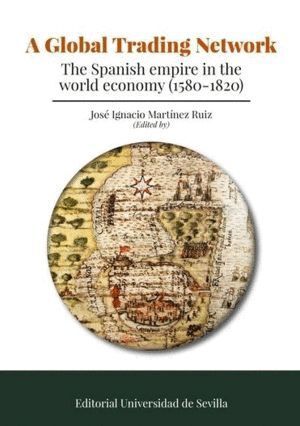
The Hispanic Monarchy became, over the course of the sixteenthcentury, the first global empire in history. American silver and theCarrera de Indias undoubtedly played a key role in the workings of the Spanish empire. However, within the empire and at its limits orperipheries, there were other forms of trade where, along with thesilver, other valuable products were exchanged. Far from theexclusivity established by the metropolis in the relations with itsrespective colonies, what actually existed was a global tradingnetwork within which money, precious metals, merchandise and flows ofinformation circulated, legally at times and tolerated on otheroccasions and, always, with the mechanisms established to enforce thelaw proving insufficient to put an end to the transactions conductedoutside the law. This was what happened in the case of trans- Pacifictrade and in the exchanges with Peru and Mexico, but also in thetransactions that took place between the British colonies andplantations in North America and the Caribbean and the Spanishcolonies in Central and South America, the Iberian Peninsula itselfand the Canary Islands. A similar situation occurred in the exchangesbetween Spain and the Muslim powers in North Africa, the enemies ofthe faith, exchanges that were prohibited, but which without a doubtcontinued to exist throughout the entire Modern Age. The set ofstudies compiled in this volume constitute, therefore, an importantcontribution to the study of the Spanish commercial system understoodas a global trading network from 1580 to 1820.