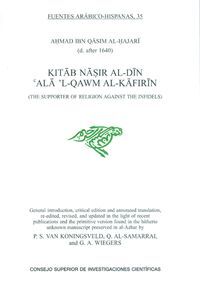
Al-Hajari's "Kitab Nasir al-Din ala l-qawm al-kafirin" is a uniqueeyewitness-report in more than one respect. First of all, it is aprimary source for the social and cultural history of Spain's late16th-century crypto-Muslims, the Moriscos, and their latervicissitudes in North Africa after the expulsion. Secondly, itprovides many otherwise unknown data concerning the contacts betweenthe Muslim world, especially North Africa, and Western Europe duringthe early decades of the 17th century. In the third place, it provides in great detail the view a Muslim scholar of Spanish extraction hadof several West-European societies (especially France and theNetherlands), including their social habits and religious convictions. This view is based on direct observations and personal contacts withmany outstanding personalities. In the fourth place, it stands out asan original piece of Islamic-Christian polemic. Finally, the work isan important source for the history of the spoken language of NorthAfrica, in particular among the diaspora Moriscos.